
What Is A Lack Of Hip Rotation In The Follow-Through?
A lack of hip rotation in the follow-through means your hips don’t continue turning toward the target after you’ve hit the ball.
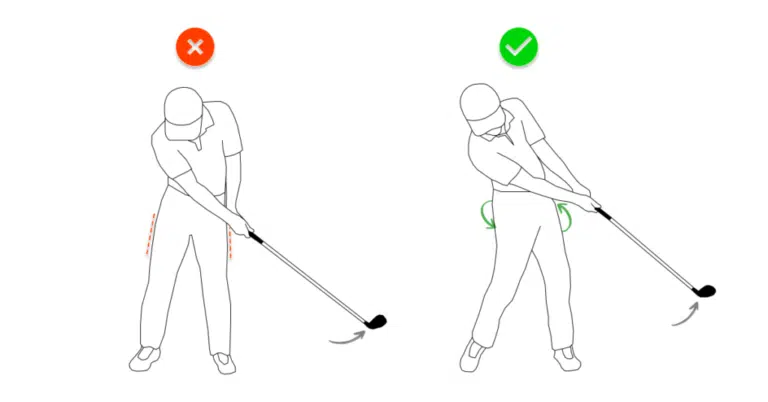
The hips stall instead of clearing out of the way, reducing speed and blocking the body from fully releasing. This causes pushes and push fades.
How It Affects Your Golf Shots
- Loss of Distance
A lack of hip rotation in the follow-through prevents your body from fully releasing energy. This reduces clubhead speed and distance. - Inconsistent Shots
When you lack hip rotation, it’s difficult to control your swing path and shots often start off line and vary in direction. - Poor Finish
Limited hip rotation after impact affects your balance. This makes it harder to hold a strong, consistent finish.
What Causes A Lack Of Hip Rotation In The Follow-Through?
- Bad Setup or Posture
An unathletic stance at address can lock the hips from the start. This leads to a lack of hip rotation in the follow-through. - Poor Weight Shift
If your weight stays on the trail foot, the hips can’t rotate properly through the swing. - Arms Dominating the Swing
When the arms and shoulders start the downswing, the hips are not able to rotate fully. - Casting
Releasing the club too early by casting stops your energy from carrying through and limits hip rotation after impact. - Early Extension
Thrusting the hips toward the ball and early extending stops them from rotating.
Use GolfWiz AI Swing Analysis to pinpoint the exact technical flaws holding you back.
What Other Faults Does Poor Hip Rotation In The Follow-Through Cause?
- Chicken Wing
The lead arm bends into a chicken wing because the hips did not turn enough to make space. - Flipping
The hands take over to get the ball airborne, causing a flipping motion because the body did not generate enough speed through hip rotation. - Loss of Balance
Hips that don’t turn fully leave the body unstable. This makes it hard to hold a strong finish.
Swing Cues & Feels
- Belt Buckle to the Target
Focus on turning your pelvis so the front faces the target on the follow-through. - Clear the Lead Hip
Imagine your lead hip turning back and behind you. - Weight on Lead Foot
Feel your weight finish on the outside of your lead foot.
Swing Adaptations
- Flare Your Lead Foot
Turn your lead foot slightly toward the target. This gives your hips more room to rotate through the shot. - Let Your Trail Heel Lift
Allow your trail heel to rise naturally in the follow-through and pivot toward the target. - Use a Smooth Tempo
Focus on a rhythmic and controlled swing. Avoid forcing power with raw strength to help your body rotate naturally.
FAQs About Lack of Hip Rotation in Follow-Through
Do all golfers need a full hip turn?
Not everyone has the same range of motion, but aiming for your hips to face the target is a key goal for power and consistency.
How can I tell if my hips aren’t rotating enough?
The GolfWiz AI app can check hip rotation for you instantly. The app highlights 50+ swing flaws and shows you the exact drills to fix them. Start for FREE now.
Will improving my hip rotation add distance?
Yes, absolutely. The hips are a major power source. A full rotation increases clubhead speed and adds yards to your shots.
Can you have too much hip rotation?
It’s more about timing. If your hips spin out too early in the downswing, it can cause problems.
Does my clothing affect my hip rotation?
Tight or restrictive clothing around the waist and hips can physically limit your ability to turn.
Other Names
- Limited Hip Turn
- Stalled Hips
Final Thoughts
Fixing a lack of hip rotation in the follow-through allows your body to fully release toward the target. This improves clubhead speed, balance, contact and consistency in your finish.
Use GolfWiz to pinpoint swing errors accurately and get AI-assisted drills for your swing.
Unlock your FREE AI-Powered Swing Analysis now.