
What Is Head Movement In The Putting Stroke?
It simply means your head shifts positions, which makes the stroke unstable.
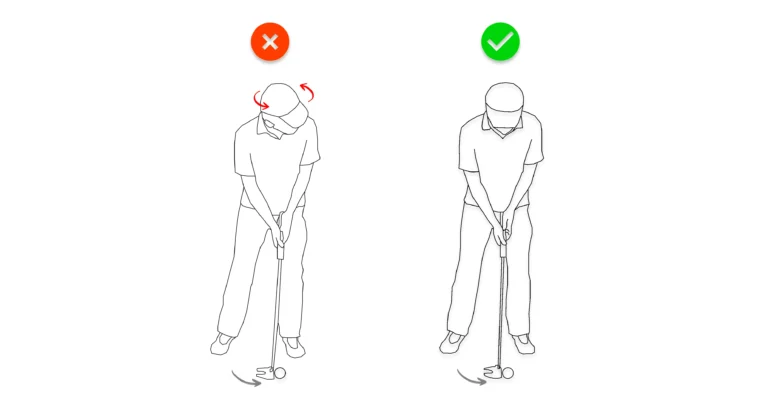
Head movement makes it hard to control the putter face and speed. It leads to pushed and pulled putts as well as poor distance control.
How Does It Affect Your Putts?
- Incorrect Start Line
A moving head causes the shoulders to rotate. The putter face points left or right at impact and the ball starts off the target line. - Bad Contact
A moving head can also cause strikes off the heel, toe, or the bottom of the face, affecting your roll and speed. - Unsteady Speed Control
Even the slightest head movement can break your rhythm. The putter does not swing with the same pace each time, making distance harder to judge. - Inconsistent Roll
A shifting head changes shaft lean, which changes loft at impact. The ball may skid or bounce before it rolls. - Loss of Focus
Head movement can shift your view of the ball, sending mixed signals to your brain. This makes you struggle with direction and distance.
What Causes Head Movement In Putting?
- Looking Up Too Early
Many golfers want to watch the ball roll, causing the head to lift before the strike is complete. American golf instructor Dave Pelz called this “peeking.” - Poor Stability at Setup
A narrow stance or weak posture reduces balance. The head moves as your body tries to stay steady. - Poor Putting Posture
A hunched or arched posture makes it hard to keep the head steady. - Hand Dominant Stroke
When your hands control the stroke, your upper body follows suit and your head moves with the hands. - Tight Grip Pressure
A tight grip creates tension in your arms and shoulders, pulling your head out of the correct position. - Weak Neck or Upper Back Muscles
Weak support muscles make it hard to hold your head steady throughout the stroke.
What Other Faults Does Head Movement Cause?
- Sway Through the Stroke
A moving head pulls the upper body and makes it sway during the stroke. - Wrist Flexion
A moving head changes pressure in your arms and can cause the wrist to flex through the stroke.
Stroke Cues & Feels
- Think of your head as the quietest part of your body.
- Feel your eyes stay calm and steady during the stroke.
- Let your shoulders move the putter.
Stroke Adaptations
- Widen your stance to improve stability.
- Use a heavier putter head to smooth your motion and reduce extra movement.
- Stand a little taller so your head stays balanced over your body.
- Try claw or left-hand-low grips to reduce hand action that pulls the head.
FAQs About Head Movement in Putting
How do I check if my head is moving through the stroke?
The GolfWiz AI app can detect head movement instantly. The app highlights 50+ swing and stroke errors and shows you the exact drills to fix them. Start for FREE now.
Do the best putters keep their head still?
Yes. High-level and professional players show minimal head movement. A stable head supports consistent face control and contact.
Is slight head movement acceptable?
Most PGA instructors teach a steady head for all short and mid-range putts.
Does lifting my head early cause missed putts?
Yes. Early head lift changes loft and face angle, causing missed putts.
Why do I move my head during the stroke?
Most golfers move their head because they want to see the ball roll or because they lack balance in their setup.
Other Names
- Head Lift In Putting
- Peeking Early In Putting
- Head Sway In Putting
- Head Drift In Putting
Final Thoughts
Head movement is a major cause of missed start lines and poor roll. A steady head supports a smooth and repeatable stroke.
Use GolfWiz to pinpoint swing errors accurately and get AI-assisted drills for your swing.
Unlock your FREE AI-Powered Swing Analysis now.