
What Is A Chicken Wing In The Follow-Through?
A chicken wing follow-through is a swing flaw where your lead elbow bends sharply and points away from your body after impact.
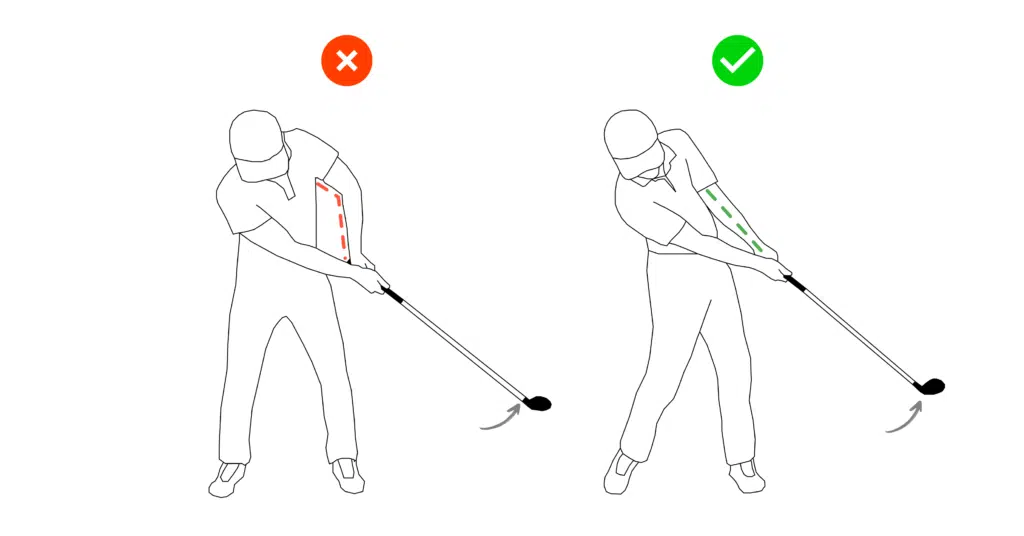
“Chicken Winging can not only create a loss in power, but it tends to add loft to the club and excessive spin to the golf ball.” (source)
How It Affects Your Golf Shots
- Loss of Distance
Without proper arm extension, you never release the full energy of the swing. The result is shorter shots. - Inconsistent Contact
A collapsing lead arm changes the swing arc, leading to inconsistent contact. - Slices & Pushes
The open clubface and lack of release often send shots weakly to the right for right-handed golfers. - Poor Ball Flight Control
Your shots lack penetration as all energy gets stuck in the arms instead of transferring to the ball.
What Causes A Chicken Wing Follow-Through?
- Over-The-Top Downswing
An over-the-top motion forces your arm to bend after impact to avoid sticking the club into the ground. - Limited Body Rotation
Lack of body rotation through the strike prevents proper arm extension, causing the elbow to bend outward. - Weak Grip
A cupped lead wrist or weak grip causes the clubface to open. This makes your body bend the arm in order to square the clubface. - Excessive Tension
Gripping tightly or swinging with stiff arms prevents a smooth release of the golf club. - Lack of Weight Transfer
Hanging back on the trail leg leaves no room for the arms to extend. The elbow folds as a way to reach the ball. - Casting
Trying to lift the ball into the air by casting encourages the lead elbow to bend. - Fear of Left Miss
Many golfers subconsciously hold the release to avoid hooks. This move forces the arm to pull across the body and bend.
Use GolfWiz AI Swing Analysis to pinpoint the exact technical errors holding you back.
What Other Faults Does A Chicken Wing Cause?
- Cut-Off Finish
Instead of the arms flowing naturally around your body, the swing ends abruptly, compromising rhythm and timing. - Low Point Gets Messed Up
A chicken wing followthrough makes the swing arc unstable and therefore the low point becomes inconsistent.
Swing Cues & Feels
- Knuckles Down
Keep your knuckles facing down and let your forearms rotate naturally through impact. - Body Rotation
Turn your belt buckle and chest to the target and let your arms simply follow through.
Swing Adaptations
- Flare Your Feet
Flare your lead foot 20–30° toward the target to make hip clearance easier and encourage smoother rotation through the swing. - Three-Quarter Finish
Focus on a three-quarter finish instead of forcing a long, textbook follow-through.
FAQs About Chicken Wing in Follow-Through
Can a strong grip help prevent a chicken wing?
Yes, a slightly stronger grip can promote proper extension and rotation.
Does the chicken wing happen with every club?
It’s most common with mid-irons and wedges where players try to guide the ball. But it can appear with any club.
How do I spot this fault in my golf swing?
The GolfWiz AI app can detect a chicken wing for you instantly. The app highlights 50+ swing mistakes and shows you the exact drills to fix them. Start for FREE now.
Is it possible to be a good golfer and still have a chicken wing?
England’s Lee Westwood is an example of a world-class golfer with a chicken wing, but for most golfers it’s a sign of inefficiency. A connected follow-through will almost always improve performance.
Could my equipment be causing it?
Poorly fitted clubs that are too long, upright or heavy can force compensations that lead to a chicken wing.
Other Names
- Elbow Separation
- Lead Arm Breakdown
- Collapsed Lead Arm
- Cut-Off Follow-through
- Barring
- Pull Elbow
Final Thoughts
The chicken wing follow-through is a sign that your arms and body are out of sync. It reduces power, consistency and accuracy. You can build a better swing by focusing on body rotation and extension.
Use GolfWiz to pinpoint swing errors accurately and get AI-assisted drills for your swing.
Unlock your FREE AI-Powered Swing Analysis now.