
What Is A Steep Backswing?
This fault happens when the club is lifted too vertically instead of moving around the body. This places the club’s shaft in a steep, off-plane position at the top.
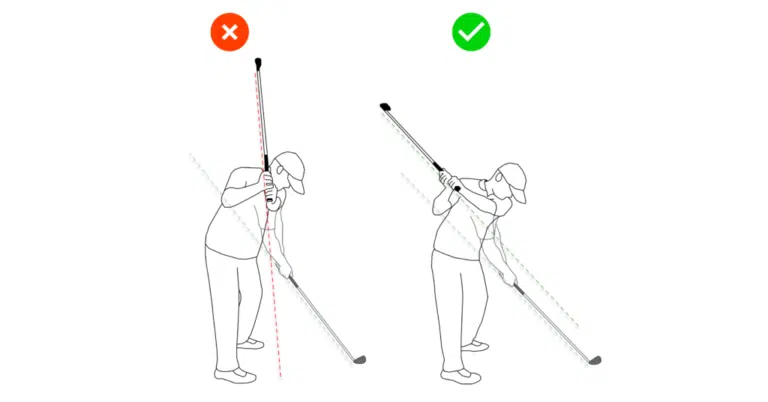
“A shaft that gets too upright in the backswing shifts the swing plane, causing the club to approach the ball from an outside-in direction at impact — the root cause of pulls and slices.” (source)
How It Affects Your Golf Shots
- Pulls
An upright shaft steepens the downswing. This yanks the club left and pulls the ball when the clubface is square to the path. - Slices
The steep path causes the club to cut across the ball. This leftward path paired with an open face produces a slice. - Inconsistent Contact
A steep backswing shifts the swing arc unpredictably, which makes ball-first contact harder to repeat. - Loss of Distance
A steep plane reduces rotation and width. Less width reduces speed and power.
What Causes A Steep Backswing?
- Overactive Arms
Lifting the arms instead of turning the body sends the shaft straight up and into a steep position. - Inside Takeaway
Pulling the club inside early can lead to a steep shaft position at the top. - Lack of Hip Rotation
Limited hip turn stops the body from rotating. The arms then lift the club into a steep position. - Flying Elbow
A trail arm that flares in the backswing pushes the shaft upward and steepens the plane. - Limited Shoulder Rotation
If your shoulders do not turn, the club can’t move around your body. It lifts vertically into an upright swing. - Setup Too Upright
Standing too tall limits your room to turn and causes a steep backswing. - Hands Working Too Far Upward
If the hands move up instead of around, the shaft becomes steep in the backswing.
Use GolfWiz AI Swing Analysis to pinpoint the exact technical errors holding you back.
What Other Faults Does A Steep Backswing Cause?
- Over-the-top Downswing
The steep shaft in transition encourages an over-the-top downswing. - Chicken Wing
Lack of width because of a steep backswing forces the arms to fold through impact into a chicken wing.
Swing Cues & Feels
- Turn Your Chest, Don’t Lift Your Arms
Feel the chest rotate to move the club. This prevents the arms from lifting it vertically. - Keep the Trail Elbow Closer to Your Side
Feel the trail elbow stay connected. This flattens or shallows the shaft and keeps it on plane. - Let the Club Move Around Your Body
Feel the club trace a wider arc. This stops the shaft from going straight up.
Swing Adaptations
- Strengthen Grip Fundamentals
A solid grip promotes proper wrist movement in the backswing and allows for a more on-plane swing.
FAQs About A Steep Backswing
How much wrist hinge is correct?
A good target is a 90-degree angle between your lead arm and the club shaft when your arm is parallel to the ground. It should look like an “L”.
Should I actively try to hinge my wrists?
No, it should be a passive reaction. A good body turn and the momentum of the club will cause your wrists to hinge naturally.
Does my grip affect my wrist hinge?
Absolutely. A grip that’s too much in the palm restricts wrist motion. Holding the club more in your fingers allows for a better hinge.
Can a golfer have too much wrist hinge?
Yes. Over-hinging can make it very difficult to time the release of the club, leading to wild inconsistency and a loss of control.
How can I tell if I have this issue?
The GolfWiz AI app can detect a lack of wrist hinge for you instantly. The app highlights 50+ swing errors and shows you the exact drills to fix them. Start for FREE now.
Alternate Names
- Vertical Shaft at the Top
- Upright Takeaway Position
Final Thoughts
A shaft that gets too upright limits your rotation and consistency. Weak rotation, overactive arms or tight mobility often create this steep position.
Use GolfWiz to pinpoint swing errors accurately and get AI-assisted drills for your swing.
Unlock your FREE AI-Powered Swing Analysis now.