


What Does Head Movement At Impact Mean?
It happens when your head and upper body move forward, toward the target, through impact.
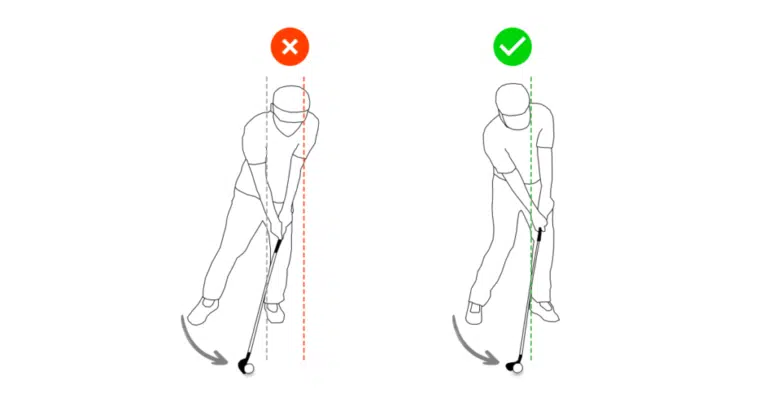
This shifts your path and causes pushes, push fades, or occasional pulls.
How It Affects Your Golf Shots
- Thin and Topped Shots
You often top the ball because your Low Point shifts too far ahead of the ball. - Loss of Power
You lose power since you can’t compress the ball correctly due to the head getting ahead. - Lower Accuracy
The clubface opens or closes because your body moves improperly. This makes your shots inaccurate. (clubhead speed drops 2.14% per handicap point) - Inconsistent Trajectory
Forward head movement causes your launch angles to vary, so some shots fly too high while others fly too low and short.
What Causes Head Movement At Impact?
- Upper-Body Dominance
Starting the downswing with arms and shoulders pulls your head and body ahead of the ball early. - Hip Slide
When your hips slide sideways instead of turning, your body moves your head toward the target. - Reverse Pivot
A reverse pivot in the backswing makes your head move ahead instead of staying centered. - Overly Crouched Setup
Starting too low limits how your body can turn and can shift the upper body forward. - Excess Grip Pressure
Holding the club too tight makes your arms tense, which forces your upper body to move forward. - Excessive Weight Shift
Instead of rotating, some golfers slide their weight excessively forward. This lateral move pushes the head past the ball. - Reverse Spine Angle
A reverse spine angle in the backswing can cause forward head movement in transition.
Use GolfWiz AI Swing Analysis to pinpoint the exact technical errors holding you back.
What Other Faults Does Head Movement Cause?
- Eyes Behind The Ball
Pick a single dimple at the back of the ball. Keep your eyes there through impact to anchor your head position. - Keep Your Trail Shoulder Back
Feel like your trail shoulder stays behind the ball as long as possible. - Rotate, Don’t Slide
Repeat this mantra. Rotation provides power, while sliding only drags your head ahead of the ball.
Swing Cues & Feels
- Eyes Behind The Ball
Pick a single dimple at the back of the ball. Keep your eyes there through impact to anchor your head position. - Keep Your Trail Shoulder Back
Feel like your trail shoulder stays behind the ball as long as possible. - Rotate, Don’t Slide
Repeat this mantra. Rotation provides power, while sliding only drags your head ahead of the ball.
Swing Adaptations
- Narrow Stance
Flare both feet outward and narrow your stance slightly. This allows easier hip rotation and prevents forward movement. - Compact Swing
Shorten the backswing and emphasize rotation over power. - Allow Controlled Movement
Allow for a small lateral move, but brace firmly with your lead leg. This balances motion without head movement.
FAQs About Narrow Stance
Does my head need to stay perfectly still?
No. Some natural movement is fine. The key is avoiding forward movement ahead of the ball before impact.
Is “head down” the same as “head back”?
No. “Head down” restricts rotation and causes issues. “Head back” means staying centered behind the ball for better contact and power.
What’s the main feel I should have?
You should feel your chest and head stable as your hips open. The motion should be rotational, not sliding forward.
Can my setup cause this problem?
Yes. Starting with weight too far forward (on your lead foot) or your head already ahead of the ball makes this fault more likely.
How can the GolfWiz app help?
The GolfWiz AI app can detect head movement instantly. The app highlights 50+ swing errors and shows you the exact drills to fix them. Start for FREE now.
Also Called
- Head Sliding Forward
- Forward Lunge
- Sliding Through Impact
- Over-Shifted Head/Torso
Final Thoughts
Getting your head ahead of the ball at impact reduces consistency and power. Improve your swing sequence by practicing specific drills.
Use GolfWiz to pinpoint swing errors accurately and get AI-assisted drills for your swing.
Unlock your FREE AI-Powered Swing Analysis now.