
What Is A Lack Of Hip Rotation In The Downswing?
A lack of hip rotation indicates that your hips are stalling or barely rotating as you swing down from the top.
This reduces space for the arms to swing through.
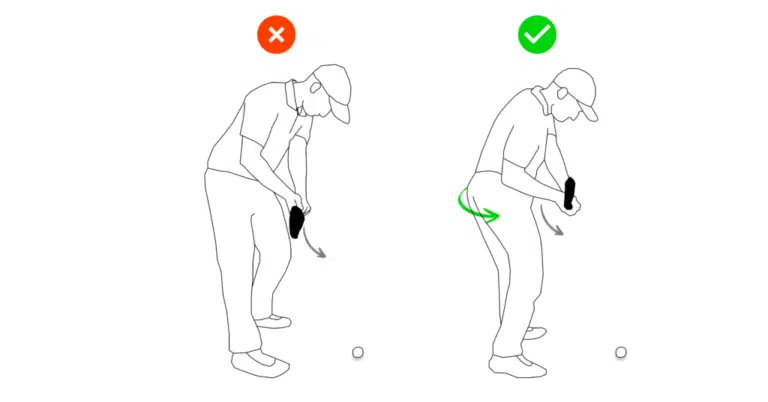
A study of professional golfers showed that when golfers can’t rotate their hips well, their lower back and pelvis move more during the swing.
This extra movement can lead to compensation, inconsistent contact, and less power.
How It Affects Your Golf Shots
- Pulls
When the hips don’t open, the upper body takes over. This makes the club swing left and creates pulls. - Slices
A lack of hip turn steepens the path, so the club cuts across the ball and produces slices.
- Weak Contact
Without hip rotation, the body cannot create pressure into the ground. This reduces compression and strike quality. - Loss of Distance
Hip rotation is a major source of speed. When the hips don’t rotate, the swing loses power.
What Causes A Narrow Stance?
- Weak Lower Body
If the legs and glutes can’t support rotation, the hips slow down and don’t turn. - Rounded Posture
A posture with rounded hips at setup limits hip rotation. - Lack of Hip Rotation in the Backswing
If the hips do not turn in the backswing, they can’t rotate well coming down. - Hip Slide
Sliding instead of turning gives you less space to rotate and leaves the hips stuck in transition. - Poor Weight Shift
If weight stays on the trail side, the hips can’t rotate properly. - Trying to Hit With the Arms
Overusing the arms reduces hip rotation in the downswing. - Tight Hip Flexors
Restricted hip flexors limit hip mobility, causing a lack of hip rotation. - Fear of Opening Up Too Soon
Some players hold their hips closed to avoid slicing. This reduces hip rotation.
Use GolfWiz AI Swing Analysis to pinpoint the exact technical issues holding you back.
What Other Faults Does Lack of Downswing Hip Rotation Cause?
- Over-The-Top Downswing
When the hips don’t turn, the upper body moves first, which steepens the path into an over-the-top downswing. - Early Extension
With no hip rotation in the downswing, the body stands up at impact and early extends to clear space to the ball. - Chicken Wing
Poor hip rotation forces the lead arm to fold into a chicken wing after impact.
Swing Cues & Feels
- Push the Trail Foot Into the Ground
This pressure helps the hips turn and keeps the downswing driven by the lower body. - Turn Your Belt Buckle Past the Ball
Feel your belt buckle rotate through impact to keep the hips moving instead of stalling.
Swing Adaptations
- Flare the Lead Foot
A flared lead foot creates more room for hip rotation.
FAQs About Narrow Stance
How do I know if my hips aren’t rotating?
The GolfWiz AI app can detect a lack of hip rotation instantly. The app highlights 50+ swing faults and shows you the exact drills to fix them. Start for FREE now.
Does poor hip rotation always cause a slice?
Often yes, because stalled hips steepen the club’s path. But ball flight depends on face angle, too, so pulls are another common result.
Should the hips start the downswing?
Yes. Proper sequencing begins from the ground up, with the hips shifting and rotating.
Can better mobility help fix this?
Yes, hip and glute mobility makes rotation easier.
How long does it take to fix stalled hip rotation?
Many golfers improve quickly, some within a week, when focusing on rotation cues. Strength and mobility improvements may take several weeks.
Other Names
- Stalled Hips
- Lower Body Not Clearing
Final Thoughts
A lack of hip rotation in the downswing affects sequencing and reduces power. Weak lower-body strength and tight hips often cause this problem.
Use GolfWiz to pinpoint swing errors accurately and get AI-assisted drills for your swing.
Unlock your FREE AI-Powered Swing Analysis now.