
What Is Narrow Stance In Golf?
A narrow stance is simply when the feet are positioned too close together relative to the club being used and the player’s body type.
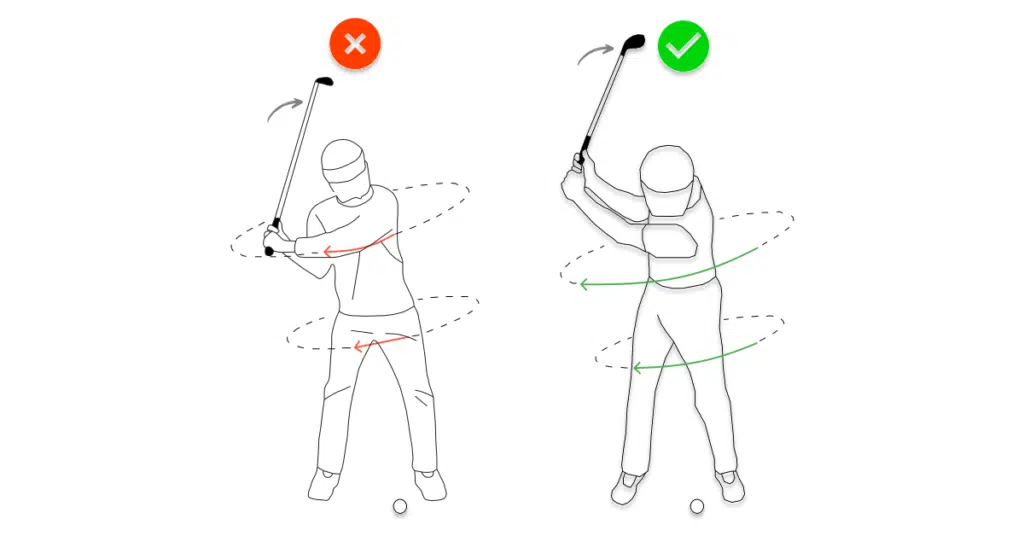
An excessively narrow stance reduces stability and balance, making it difficult to create power and maintain consistent swing mechanics.
How It Affects Your Golf Shots
- Loss of Balance
A narrow stance shrinks your base of support, making it difficult to stay balanced throughout the swing. Players often feel wobbly and struggle to control body rotation. - Reduced Power and Distance
With the feet too close together, you generate less ground force and rotational torque. This limits swing speed and overall distance. - Inconsistent Contact
The unstable platform causes erratic low point control. This results in poor clubface delivery and unreliable strike patterns. - Thin or Topped Shots
Instability lifts your body upward through impact to regain balance. The club bottoms out early, catching the ball thin or skimming the top. - Poor Weight Transfer
Narrow feet prevent effective lateral shift from trail to lead side. Weight stays trapped on the rear foot, blocking rotation.
What Causes A Narrow Stance?
- Lack of Awareness
Many players don’t know stance width varies by club (narrower for wedges, wider for driver). This leads to consistently narrow setups across irons. - Fear of Losing Balance
Golfers narrow their feet thinking it improves control or prevents falling. Ironically, it creates instability and a higher center of gravity. - Limited Flexibility
Tight hips or ankles make wide stances uncomfortable, causing unintentional narrowing. Poor mobility restricts proper shoulder-width positioning. - Excessive Knee Flex
Too much knee bend pulls the hips inward, naturally narrowing foot position. The body compensates by crowding the ball. - Trying to Swing Upright
Avoiding hip hinge leads to straighter legs and narrower feet. This upright posture mimics a narrow stance without bending adequately. - Copying Pros Incorrectly
Golfers sometimes imitate narrow pro stances for specific shots, like chips and pitches, even with longer clubs.
Use GolfWiz AI Swing Analysis to pinpoint the exact technical flaws holding you back.
What Other Faults Does A Narrow Stance Cause?
- Swaying During the Swing
A narrow stance lacks lateral stability, causing excessive side-to-side movement. This breaks posture through impact. - Early Extension
Instability forces standing up at impact for balance. This common early extension ruins compression. - Reverse Pivot
A poor base prevents proper weight shift, trapping weight on the trail side and creating a classic reverse pivot.
Swing Cues & Feels
- Build your pyramid
Feel your feet pressing outward into the ground, creating a wide triangular base. This anchors rotation and prevents swaying. - Weight in your heels
Keep 60% pressure in the heels at setup and maintain through impact. Avoid rocking forward, which narrows your effective stance width. - Hips wide, shoulders relaxed
Set your hips shoulder-width first, then let the shoulders hang naturally. Wide hips provide stability for a controlled turn. - Turn around your spine
Feel your lower body grounded while the upper body rotates. A narrow stance makes this impossible while a wide base enables a proper axis.
Swing Adaptations
- Wedge Shots
Use a slightly narrower than shoulder-width stance to promote clean contact and precise low-point control for the short game. - Short Irons
Set your feet approximately shoulder-width apart.This provides balanced stability for consistent compression and centered strikes. - Mid-Irons
Maintain a standard shoulder-width stance, which supports proper rotation and weight transfer for reliable mid-trajectory shots. - Long Irons
Stand with the feet slightly wider than shoulder-width. This enhances ground force usage and launch angle for a penetrating ball flight. - Driver Swings
Widen your stance beyond the shoulders to create a powerful base for maximum coil, speed, and tee-shot distance. - Balance Issues
Intentionally widen your stance 1-2 inches. This lowers your center of gravity and anchors the swing against falling or swaying. - Limited Mobility
A moderate shoulder-width stance with good posture allows rotation without forcing uncomfortable hip/ankle positions.
FAQs About Narrow Stance
When is a narrow golf stance correct?
Narrow works for wedges/chips, but full swings need shoulder-width for stability.
How can I spot a narrow golf stance?
Loss of balance, weak power, thin shots, or unstable rotation are good indicators.
Does stance width change by golf club?
Yes, slightly narrower for wedges, shoulder-width for irons, progressively wider for driver and woods.
Does a narrow stance reduce my distance?
Yes. A narrow base limits ground force generation and rotational torque, often costing 10-20 yards.
What is the ideal stance width for golf beginners?
Shoulder-width builds a reliable balance/power base. The GolfWiz AI app detects a narrow stance instantly, highlights 50+ other faults, and shows you the exact drills to fix them. Start FREE now.
Alternate Names
- Feet Too Close
- Narrow Base
- Restricted Stance
- Tight Setup
- Limited Base of Support
Final Thoughts
A properly balanced stance allows the body to move efficiently and generate consistent power. Developing the correct stance width for each club helps players maintain balance, improve rhythm, and generate consistent contact.
Use GolfWiz to pinpoint swing errors accurately and get AI-assisted drills for your swing.
Unlock your FREE AI-Powered Swing Analysis now.