
What Is An In-to-Out Swing Path?
An in-to-out swing path means the club comes too much from inside the target line in the downswing.
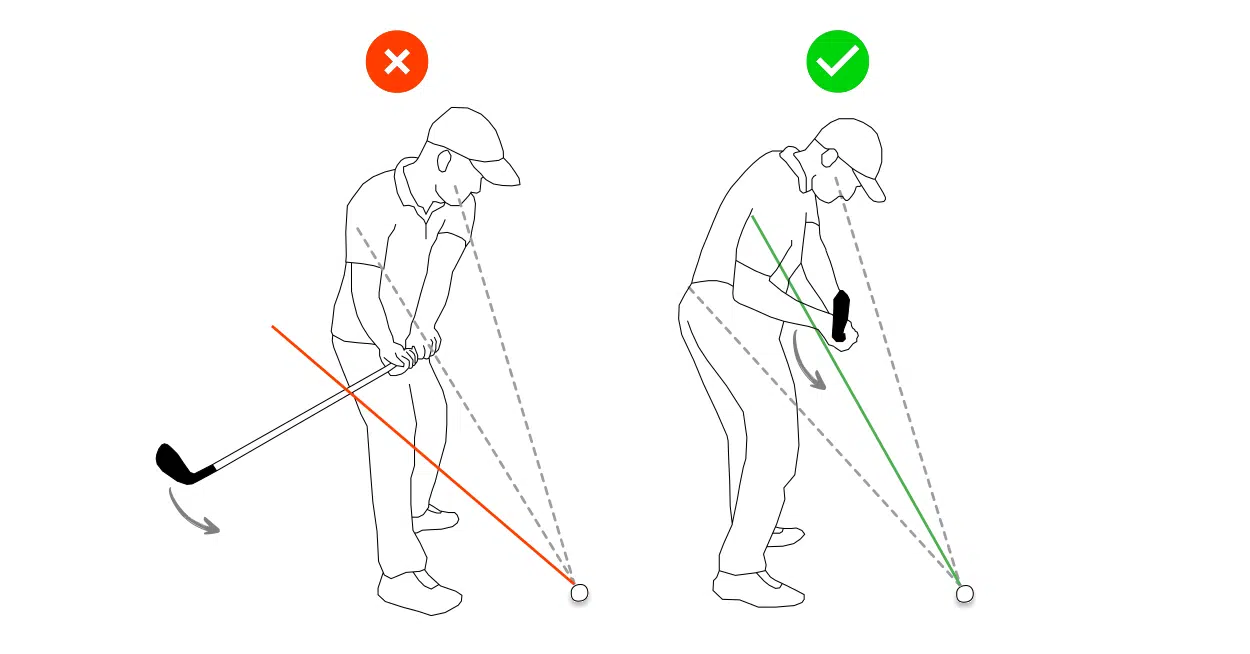
The club swings out to the right after impact, and can cause a block pushes and hooks.
“The natural swing path tendency is inside-out for 80% of right-handed golfers, leading to pushes and hooks when exaggerated.” (source)
How It Affects Your Golf Shots
- Pushes and Blocks
The club swinging too far out to the right during impact causes the shots to start right and stay right. - Push-Draws and Hooks
If the face closes during an in-to-out swing, the ball starts right and hooks back left. - Toe Strikes
An in-to-out swing path pushes the club outward during impact. This often leads to toe contact. - Low Point Problems
The low point becomes inconsistent when the club drops inside during the downswing. This can lead to thinned or chunked shots. - Face Control Issues
An in-to-out swing also makes it difficult to control the clubface. This can cause ball flights with huge curves.
What Causes This Error?
- Trail Elbow Falling Behind the Body
When the trail elbow drops down behind the body, it pulls the club inside the swing path. - Hip Slide Toward the Target
When the hips slide forward, the body leans back and the club can drop under the correct plane. - Shoulders Staying Closed
If your shoulders stay closed for too long, the club gets stuck behind the body and inside the target line. - Inside Takeaway
An inside takeaway puts the club behind you early. The downswing can follow the same inside path. - Arms Pulling Down Too Soon
Pulling the arms down without rotating the body drops the club too far inside. - Across The Line At The Top
A club pointed to the right of target at the top encourages an in-to-out path in the downswing.
Use GolfWiz’s AI Swing Analysis to pinpoint the exact technical errors holding you back.
What Other Faults Does An In-To-Out Swing Path Cause?
- Early Extension
An in-to-out swing path can push your hips forward in order to make contact. - Casting
Starting the downswing with the upper body throws the clubhead early, also called a casting motion in the downswing.
Swing Cues & Feels
Keep your hands in front of your chest during the downswing.
Feel your lead shoulder turn through the ball.
Turn your hips instead of sliding them.
Picture the club exiting slightly left after impact.
Swing Adaptations
Flare your lead foot to help rotation.
Narrow your stance if a hip slide causes an in-to-out path.
- Shorten your backswing to improve control.
Stand a little taller to stop the club from dropping behind you.
FAQs
Is an in-to-out swing path always bad?
No. A small in-to-out swing is actually good, as that’s how pros and better amateurs swing. However, too much in-to-out creates pushes and hooks.
How do I know for sure if I’m coming too much from the inside?
The GolfWiz AI app can detect an in-to-out downswing instantly. The app highlights 50+ swing errors and shows you the exact drills to fix them. Start for FREE now.
Can ball position make the path more in-to-out?
Yes. A back ball position increases in-to-out swing path.
Why do my shots start right?
An in-to-out swing path can open your clubface and make your shots start right.
Does this path affect irons?
Yes, this also affects your iron shots. An exaggerated in-to-out swing path can make contact difficult, leading to thin shots and toe strikes.
Other Names
- Inside-Out Swing Path
- Swinging Out To The Right
- Under-Plane Swing
Final Thoughts
An in-to-out swing path works well when it is small and controlled. Too much leads to pushes, hooks and inconsistent contact.
Use GolfWiz to pinpoint swing errors accurately and get AI-assisted drills for your swing.
Unlock your FREE AI-Powered Swing Analysis now.